


Creating the Ultimate Catio: Combining Enclosed Spaces with Oscillot

Creating the Ultimate Catio: Combining Enclosed Spaces with Oscillot
The Complete Guide to Designing Hybrid Cat Containment Systems That Maximize Safety and Freedom
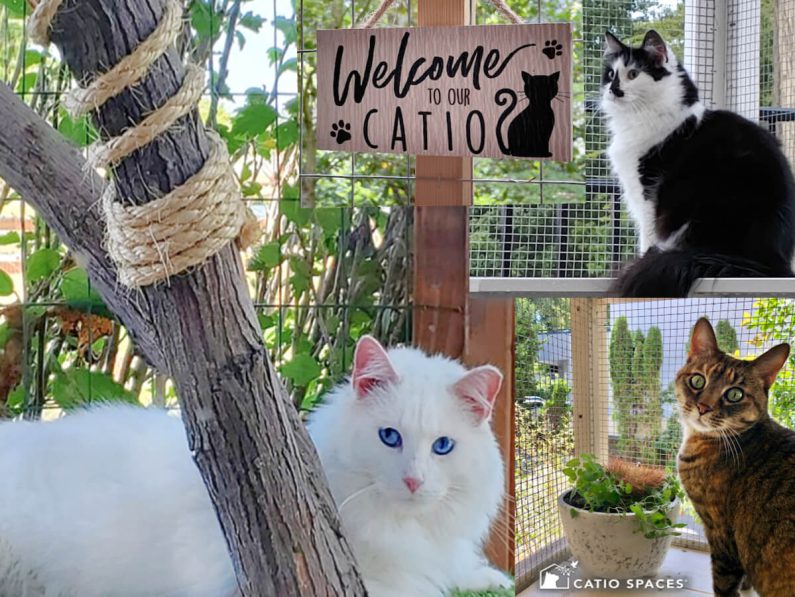
As cat owners increasingly seek ways to give their feline companions safe outdoor access, the combination of traditional enclosed catios with innovative barrier systems like Oscillot has emerged as the gold standard in cat containment. This comprehensive guide explores how to create the ultimate hybrid system that offers your cats the best of both worlds: secure enclosed spaces for play and exploration, combined with Oscillot's revolutionary paddle system for protecting larger perimeter areas.
Whether you're starting from scratch or enhancing an existing outdoor space, understanding how to effectively combine these two approaches will help you create a cat paradise that's both secure and enriching. Let's dive into everything you need to know about designing, building, and maintaining the ultimate catio-Oscillot hybrid system.
Understanding the Hybrid Approach: Why Combine Catios with Oscillot?
The concept of combining enclosed catios with Oscillot fence systems represents a paradigm shift in cat containment philosophy. Rather than choosing between complete enclosure or perimeter protection, savvy cat owners are discovering that integrating both approaches creates a more versatile, cost-effective, and enriching outdoor environment.
The Limitations of Single-System Approaches
Traditional fully-enclosed catios, while secure, can be expensive to build over large areas and may feel restrictive in smaller yards. A 10x10 fully enclosed catio might cost $2,000-$5,000 in materials alone, not including labor. Scaling this up to cover a 1,000 square foot backyard becomes prohibitively expensive for most homeowners.
Conversely, using only Oscillot paddle systems around your entire yard perimeter provides freedom but requires vigilance about removing jumping aids and ensuring your cats can't access areas near the fence line that might provide leverage.
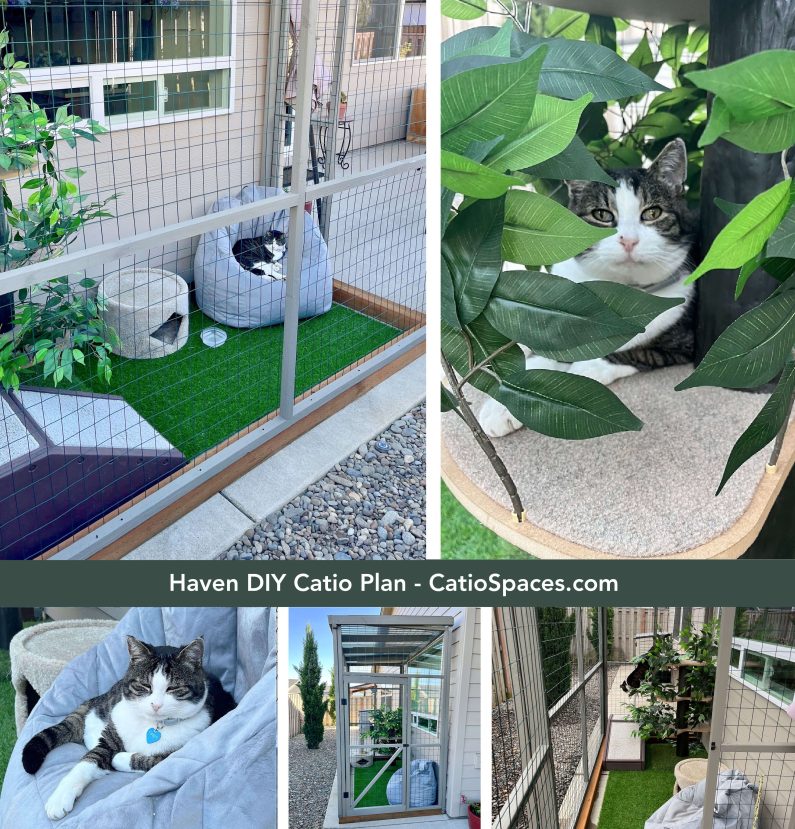
A traditional enclosed catio provides ultimate security but can be costly for large areas
The Hybrid Advantage
By combining both systems strategically, you can:
- Maximize Space Within Budget: Use fully enclosed catios for high-traffic areas near doors and windows, while protecting the larger yard perimeter with Oscillot
- Create Activity Zones: Design enclosed "adventure zones" with climbing structures and perches, connected to open grass areas secured by Oscillot
- Enhance Safety Layers: Multiple containment methods provide redundancy - if a cat somehow compromises one system, the other serves as backup
- Accommodate Multiple Cats: Some cats may prefer the security of enclosed spaces while others enjoy the openness of Oscillot-protected areas
- Future Flexibility: Start with key enclosed areas and Oscillot perimeter, then expand enclosed sections as budget allows
- Aesthetic Integration: Blend enclosed structures architecturally with your home while keeping fence lines clean with minimal visual impact
Sarah from Portland built a 6x8 enclosed catio connected to her cat door for $1,200, then installed Oscillot around her 150 linear feet of fencing for an additional $900. Total investment: $2,100 for protecting her entire 800 sq ft backyard, compared to $8,000+ for fully enclosing the same space. Her three cats now enjoy both the security of the enclosed catio for lounging and the freedom of the full yard for exploration.
Designing Your Hybrid System: Key Planning Considerations
Successful hybrid catio-Oscillot systems start with thoughtful planning that considers your space, budget, cats' personalities, and long-term goals. Here's how to approach the design process strategically.
Assessing Your Space and Current Infrastructure
Begin by thoroughly evaluating your outdoor area:
- Fence Height and Condition: Oscillot requires a minimum 6-foot fence height for effectiveness. Survey your existing fencing and identify any sections that need upgrading before installation.
- Access Points: Note all potential cat access points - windows, doors, pet doors. These become logical locations for enclosed catio sections.
- Sun and Shade Patterns: Map how sun moves across your yard throughout the day. Cats need both sunny basking spots and shaded retreat areas.
- Sight Lines and Views: Identify areas with interesting views (bird feeders, trees, wildlife activity) where enclosed catios would maximize enrichment.
- Landscape Features: Document trees, shrubs, garden beds, and hardscaping. These affect both catio placement and Oscillot installation.
- Underground Utilities: Before digging for posts or foundations, call 811 to mark underground utilities.

Oscillot paddles installed on chain link fencing create an effective barrier while maintaining visibility
Determining Optimal Enclosed vs. Open Zones
Not all areas of your yard need the same level of containment. Think strategically about zoning:
- Entry/Exit Areas: 4-8 foot enclosed "airlocks" at cat doors prevent dashing and provide training zones
- Window Catios: 3-6 foot window box catios for indoor-outdoor viewing and access
- Deck/Patio Integration: Enclose existing decks or patios where you spend time, allowing supervised interaction
- Activity Centers: 8-12 foot enclosed zones with vertical climbing, scratching posts, and enrichment features
- Shy Cat Sanctuaries: Enclosed hideaways for timid cats who need extra security
- Lawn Areas: Grass spaces for running, rolling, and grass-munching
- Garden Perimeters: Protect garden beds and landscaping from escape attempts
- Existing Structures: Sheds, garages, and other outbuildings that cats can explore around
- Pathways and Corridors: Routes between enclosed catio sections
- Natural Features: Areas with existing trees, stumps, or boulders for exploration
Creating Connection Points and Flow
The magic of hybrid systems lies in seamless integration. Design thoughtful transitions between enclosed and open areas:
- Tunnel Systems: Build or purchase enclosed tunnels connecting catio sections through Oscillot-protected open spaces. These can be ground-level or elevated walkways.
- Strategic Gate Placement: Install gates in enclosed sections that you can open when supervising, giving cats access to the wider Oscillot-protected yard.
- Multiple Entry Points: Design several ways to access the system from your home - cat doors to enclosed sections, window exits to catios, and standard doors to supervised areas.
- Progressive Exploration: Create a hierarchy from most enclosed (secure catio) to semi-open (tunnel) to fully open (Oscillot yard) so timid cats can acclimate gradually.
Material Selection and Product Recommendations
Choosing the right materials and products is crucial for building a system that's safe, durable, and low-maintenance. Let's break down the best options for each component.
Oscillot System Components
Featured Oscillot Products for Hybrid Systems
Oscillot offers several kit sizes to match your perimeter needs. Choose based on your total fence length and fence type.
12' Cat-Proof Fence Kit
Best for: Small yards, side gates, or testing the system
Coverage: 12 feet of linear fencing
Ideal Use: Single fence section or connecting two catio areas
Installation Time: 1-2 hours
20' Cat-Proof Fence Kit
Best for: Medium fence sections, backyard zones
Coverage: 20 feet of linear fencing
Ideal Use: Primary fence line section in hybrid systems
Installation Time: 2-3 hours
40' Cat-Proof Fence Kit
Best for: Large sections, full side yards
Coverage: 40 feet of linear fencing
Ideal Use: Perimeter protection for hybrid systems with multiple enclosed zones
Installation Time: 4-5 hours
Cat Tree Guard
Best for: Trees near fence lines in open zones
Coverage: Individual tree protection
Ideal Use: Preventing cats from using trees as ladder to bypass Oscillot
Critical for: Trees within 8 feet of fencing
Paddle Set (Replacement/Extra)
Best for: Custom configurations, replacements
Coverage: Additional paddles for unique installations
Ideal Use: Corners, irregular fence sections, or refreshing older installations
Color Options: Match or mix with existing kit colors
Measure your total fence perimeter, then subtract any sections that will have enclosed catios extending to the fence line. Add 10% extra for corners and irregularities. Example: 150 feet total perimeter - 20 feet enclosed catio sections = 130 feet needed. Order 140-150 feet of Oscillot kits (example: two 40' kits + two 20' kits + one 12' kit = 132 feet).
Enclosed Catio Materials
For the enclosed sections of your hybrid system, material quality directly impacts safety and longevity:
| Material | Best Use | Pros | Cons | Cost Range |
|---|---|---|---|---|
| 2x4 Pressure-Treated Lumber | Frame construction | Affordable, weather-resistant, easy to work with | Requires sealing, can warp over time | $5-8 per 8' board |
| Cedar or Redwood | Frame construction, aesthetic builds | Naturally rot-resistant, beautiful appearance | More expensive, still requires maintenance | $12-20 per 8' board |
| 16-Gauge Welded Wire (2"x3") | Walls, roof, floor | Strong, predator-resistant, good visibility | Can rust if not coated, sharp when cut | $0.80-1.20 per sq ft |
| PVC-Coated Welded Wire (1"x2") | Premium walls and ceilings | Won't rust, safer edges, small opening | More expensive, black coating shows dirt | $1.50-2.50 per sq ft |
| Hardware Cloth (1/2") | Floors, small animal protection | Extremely secure, prevents digging | Expensive, reduces visibility, hard to work with | $2-3 per sq ft |
| Polycarbonate Panels | Roof sections, wind breaks | Weatherproof, clear or tinted, durable | Can be pricey, needs proper framing | $3-6 per sq ft |
Chicken Wire: Too weak, easily torn by determined cats or predators
Plastic Mesh: UV degrades it quickly, cats can chew through
Untreated Wood: Will rot within 2-3 years in most climates
Standard Window Screen: Cats easily tear through, not structurally sound
Hardware and Fasteners
Don't skimp on connectors and fasteners - they're critical for structural integrity:
- Deck Screws (3" exterior grade): Frame assembly, post attachment
- Fence Staples (galvanized): Attaching wire to wood frames
- Heavy-Duty Zip Ties (UV-resistant): Wire-to-wire connections, temporary fixes
- L-Brackets and Corner Braces: Reinforcing frame joints
- Concrete Mix: Setting posts for freestanding catios
- Hinges and Latches: Access doors and gates (cat-proof latches essential)
Installation Guide: Building Your Hybrid System
With planning complete and materials acquired, it's time to bring your hybrid catio-Oscillot system to life. This section walks through the construction process step-by-step.

Proper framing and wire mesh installation ensure a secure enclosed catio section
Phase 1: Installing the Oscillot Perimeter System
Start with Oscillot installation as it establishes your primary containment boundary and is less invasive than catio construction:
-
Pre-Installation Fence Preparation:
- Verify all fencing is at least 6 feet tall; upgrade shorter sections
- Repair any damaged fence panels, loose boards, or unstable posts
- Clear vegetation from fence line (trim back within 2 feet)
- Remove or secure any items near fence that could serve as jumping aids
-
Post Kit Installation:
- Mark post kit locations every 3-4 feet along fence top
- Ensure posts are level and aligned consistently
- Secure post kits with provided screws appropriate for fence material
- Double-check stability before proceeding to paddle installation
-
Paddle Assembly and Mounting:
- Assemble paddle sections according to Oscillot instructions
- Insert paddle assemblies into installed post kits
- Test rotation - paddles should spin freely without catching
- Secure end caps and ensure no gaps at corners or gates
-
Corner and Gate Solutions:
- Use corner post kits or paddle sets for 90-degree turns
- Install gate-specific hardware for fence gates in Oscillot line
- Ensure gate Oscillot sections align when gate is closed
- Test all gates multiple times to verify smooth operation
-
Tree Guards Installation:
- Identify all trees within 8-10 feet of Oscillot-protected fence
- Wrap cat tree guards around trunk above cat's jumping reach
- Secure according to product instructions without damaging bark
- Trim low branches that might provide bypass routes
Before considering the Oscillot system complete, perform this test: Walk the entire perimeter looking for any objects within 6 feet of the fence (furniture, firewood stacks, air conditioning units, storage boxes, etc.) that could provide a stepping stone. Remember: cats need to be jumping from ground level to fence top in a single motion for Oscillot to work effectively. Remove or relocate any potential assists.
Phase 2: Constructing Enclosed Catio Sections
With perimeter security established, build your enclosed zones:
-
Foundation and Base Frame:
- Level the ground where catio will sit; consider gravel base for drainage
- Build rectangular base frame from 2x4 lumber
- For freestanding catios, set 4x4 posts in concrete (24" deep minimum)
- For house-attached catios, secure ledger board to house studs with lag bolts
- Ensure base is perfectly square by measuring diagonals
-
Wall Framing:
- Cut and install vertical corner posts (4x4 or 2x4 depending on size)
- Add horizontal supports every 3-4 feet vertically
- Frame door opening with double studs for rigidity
- Include window-height horizontal supports for enrichment window boxes
-
Wire Mesh Installation:
- Unroll wire mesh and cut to size (wear gloves - edges are sharp)
- Start at one corner, pulling mesh taut as you secure
- Attach with fence staples every 6-8 inches along frame members
- Overlap mesh sections by at least 2 inches, securing overlap points
- File or cap any sharp cut edges to prevent injury
-
Roof Installation:
- Frame roof with sloped rafters (minimum 3:12 pitch for drainage)
- Cover with wire mesh for ventilation, or mix wire and polycarbonate panels
- Ensure roof extends beyond walls to prevent rain entry
- Add roof supports every 4 feet to prevent sagging under snow/debris
-
Flooring Options:
- Open to ground: Use hardware cloth buried 6-12" to prevent digging in/out
- Deck boards: Build raised floor with 2x6 boards on frame, leaving drainage gaps
- Concrete pad: Pour slab for easy cleaning, slope slightly for drainage
- Pavers: Set pavers on sand base, use polymeric sand for stability
-
Door and Access Points:
- Install human access door with cat-proof latch (barrel bolts work well)
- Cut and frame cat door opening if attaching to house
- Install pet door between house and catio (electronic options for multi-pet households)
- Test all doors and latches to ensure they function smoothly
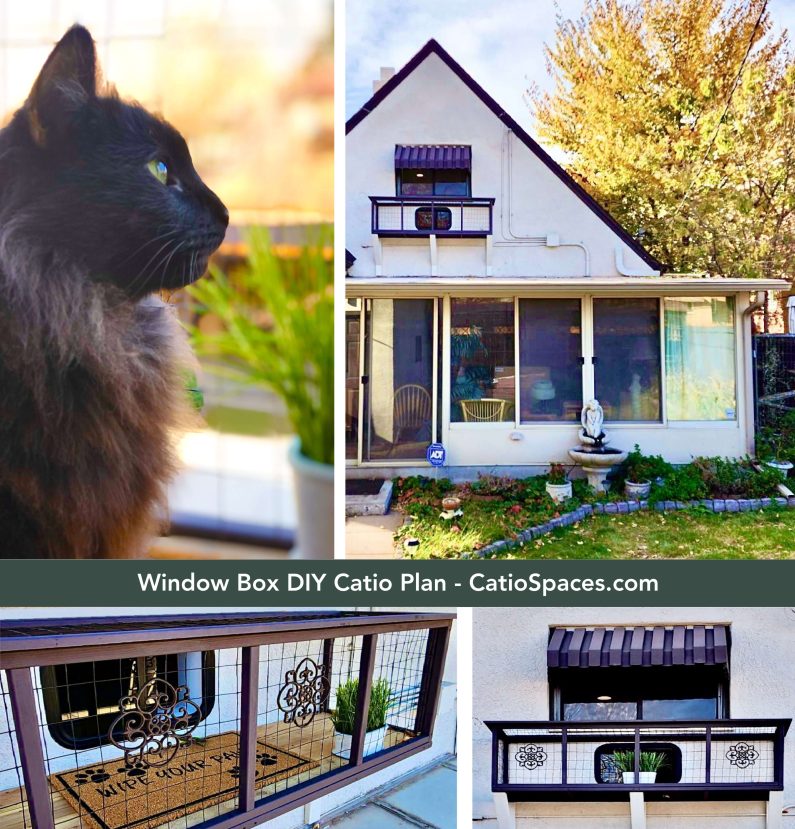
Window box catios provide perfect entry points from house to larger hybrid system
Phase 3: Connecting Systems with Tunnels and Transitions
The integration phase transforms separate components into a cohesive system:
-
Tunnel Construction:
- Build rectangular tunnel frames (minimum 12"x12" interior, 18"x18" better for larger cats)
- Use lighter materials (2x2 or 2x3 lumber) for elevated tunnels
- Cover all sides with wire mesh, leaving ends open for entry/exit
- For ground tunnels through Oscillot zones, consider wire mesh bottom to prevent escape attempts
-
Elevated Walkways:
- Build walkway base from 2x6 or 2x8 boards for stiffness
- Add wire mesh or board sides at least 12" tall
- Install support posts every 6-8 feet maximum
- Ensure walkway is completely level or slopes gently toward exit
- Test with your own weight before allowing cat access
-
Integration Points:
- Tunnels should intersect catio walls at opening height (typically 12-18" from floor)
- Frame tunnel entry in catio wall just like a window
- Secure tunnel to catio frame with brackets and screws
- Check that there are no gaps where tunnel meets catio
-
Removable Gate Options:
- Install hinged wire mesh gates between catio sections and open yard
- Use slide bolts or carabiner clips you can easily operate
- This allows supervision expansion - open gates when you're outside watching
- Clearly mark "Cat Access Gate" to remind visitors to keep closed
Before allowing cats into your new hybrid system, spend time inspecting every inch. Look for sharp edges, gaps, loose fasteners, or weak points. Try to think like a determined cat - where would you probe for weaknesses? Have a friend help you examine from outside and inside. Make any necessary adjustments with cats safely indoors.
Enrichment and Interior Design for Hybrid Systems
A structurally sound system is just the beginning. Thoughtful enrichment transforms your hybrid catio-Oscillot space into an engaging paradise your cats will actually use and enjoy.
Vertical Spaces and Climbing Opportunities
Cats are three-dimensional thinkers who crave vertical territory:
- Multi-Level Shelves: Install shelves at varying heights (12", 24", 36", 48"+) in enclosed sections for climbing, jumping, and surveying territory
- Ramps and Stairs: Provide accessible routes for senior cats, kittens, or cats with mobility issues
- Cat Trees and Towers: Outdoor-rated cat furniture adds immediate vertical interest and familiar textures
- Natural Branches: Secure sturdy branches at angles for authentic climbing experiences
- Hammocks and Suspended Beds: Install between posts or walls for swaying perch options
- Window Perches: Maximize views by placing perches near catio windows facing interesting sights
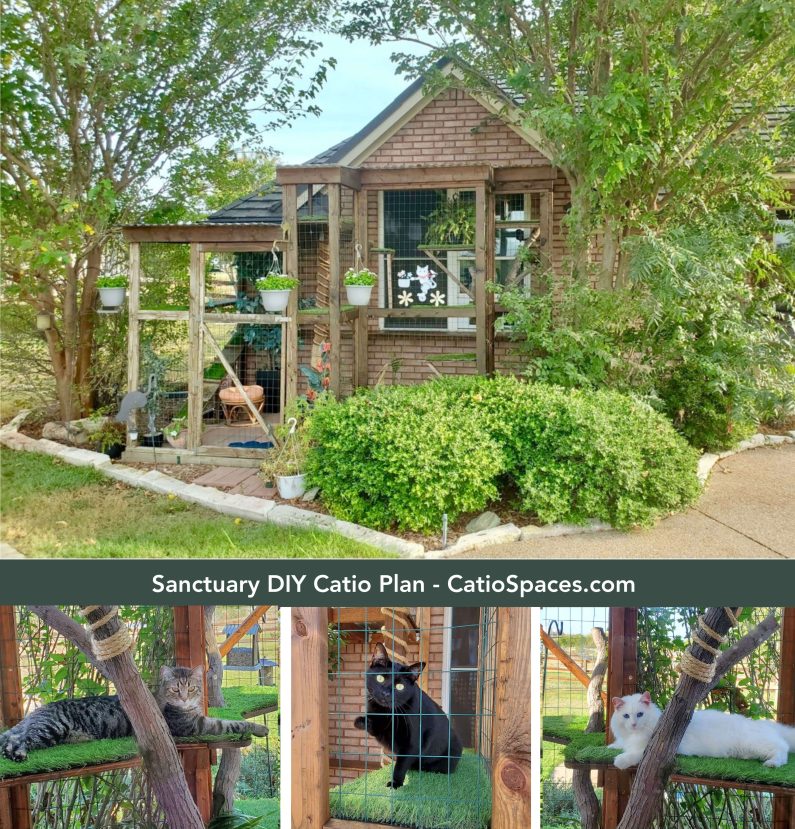
Well-designed enrichment features make catios irresistible to curious felines
Sensory Enrichment Elements
Engage all your cats' senses for a truly enriching environment:
- Safe Plants: Install pots of cat grass, catnip, valerian, spider plants, and cat thyme in enclosed sections (never in open Oscillot zones where you can't monitor ingestion)
- Herbs and Flowers: Lavender, rosemary, and marigolds add scent interest while being cat-safe
- Water Features: Small fountain or bubbler provides sound enrichment and fresh water source
- Wind Chimes and Mobiles: Gentle sounds and movements attract attention
- Scratching Surfaces: Sisal posts, cardboard scratchers, natural wood logs, and carpet-covered surfaces
- Textural Variety: Smooth wood, rough bark, soft carpet, cool stone - different surfaces for different moods
Comfort and Weather Protection
Cats need comfortable conditions to spend extended time outdoors:
- Heated and Cooled Spaces: Outdoor pet heating pads (enclosed sections only) and cooling mats for temperature regulation
- Covered Areas: Solid roof sections, tarps, or shade cloth for sun and rain protection
- Insulated Shelters: Small insulated cat houses within catio for extreme weather retreat
- Wind Breaks: Polycarbonate panels or lattice with climbing vines block harsh winds
- Multiple Bed Options: Outdoor beds, cushions, and blankets in various locations (elevated, ground-level, sunny, shaded)
Interactive and Rotational Elements
Keep the environment fresh and interesting by rotating enrichment:
- Toy Rotation Schedule: Swap out hanging toys, treat puzzles, and interactive elements weekly
- Scent Changes: Introduce new cat-safe scents periodically (dried catnip, silver vine, pine cones)
- Seasonal Adjustments: Add fallen leaves in autumn, snow play areas in winter, flower pots in spring
- Foraging Opportunities: Hide treats in puzzle feeders or around catio for hunting simulation
- Prey Simulation: Bird feeders outside Oscillot perimeter create "cat TV" viewing opportunities
A well-enriched hybrid catio system should offer enough variety that a cat can explore and engage for at least 30 minutes without becoming bored. If your cats enter and immediately exit, they need more enrichment options. Observe their patterns and add features in areas they ignore.
Safety Protocols and Maintenance
Even the best-designed hybrid system requires ongoing attention to remain safe and effective. Establish regular maintenance routines and safety checks.
Daily Safety Checks
Quick daily inspections prevent small issues from becoming major problems:
- Oscillot Paddle Inspection: Walk perimeter checking that all paddles spin freely (stick, leaves, or debris can jam them)
- Wire Mesh Quick Scan: Look for any obvious damage, holes, or separation points in enclosed sections
- Gate and Latch Check: Ensure all access points are properly closed and latched
- Jumping Aid Scan: Verify no new objects have appeared near Oscillot fencing that could serve as launch platforms
- Weather Damage Assessment: After storms, check for wind damage, fallen branches, or accumulated debris
Weekly Maintenance Tasks
More thorough weekly maintenance ensures long-term system integrity:
- Deep Clean Oscillot Paddles: Remove any dirt, spider webs, or organic matter affecting rotation
- Wire Mesh Detailed Inspection: Feel along all seams, corners, and attachment points for loosening
- Hardware Tightness Check: Test screws, bolts, and fasteners for any loosening; retighten as needed
- Floor and Surface Cleaning: Sweep floors, remove cat waste from Oscillot-protected areas, refresh litter in enclosed sections
- Plant and Water Maintenance: Water plants, refresh water features, remove dead vegetation
- Enrichment Refresh: Clean toys, rotate items, replace worn scratching surfaces
Seasonal Maintenance Requirements
| Season | Oscillot Focus | Catio Focus | System Integration |
|---|---|---|---|
| Spring | Clean winter debris, check for ice damage, test all paddles after freeze/thaw cycles | Inspect wood for winter damage, reseal/repaint as needed, check roof for leaks | Test all tunnel connections, verify no settling or shifting occurred |
| Summer | Monitor for vine overgrowth, keep vegetation trimmed back, check tree guards | Add shade cloth if needed, ensure ventilation is adequate, provide cooling stations | Verify elevated walkways remain stable in heat expansion |
| Fall | Clear fallen leaves from paddles daily, trim back dying vegetation | Prepare heating elements, seal drafts, remove summer shade cloth | Clear leaves from tunnel entrances and exits |
| Winter | Keep snow cleared from paddle area, monitor for ice buildup preventing rotation | Ensure heated areas function properly, check for snow load on roof, clear snow from entry areas | Keep tunnels clear of snow and ice, provide traction on slippery surfaces |
Predator Protection Considerations
While Oscillot prevents cats from escaping, your hybrid system should also consider preventing predators from entering:
- Under Fence Lines: Bury hardware cloth 12-18" deep along fence base in Oscillot-protected open areas
- Catio Floor: Use hardware cloth on ground-level catios or bury perimeter barrier
- Roof Access: Overhanging trees can allow raccoons or other climbers to drop onto catio roofs - trim back branches within 10 feet
- Gap Exploitation: Raccoons can squeeze through 4" openings - use 2" or smaller mesh in enclosed sections
- Latch Security: Raccoons can operate simple latches - use complex latches or locks on access doors
Emergency Preparedness
Have a plan for quickly securing or evacuating your hybrid system:
- Severe Weather Protocol: Know how to quickly bring cats inside, secure loose items, and protect vulnerable sections
- Escape Response Plan: If a cat escapes, which direction are they likely to go? Have carrier, favorite treats, and contact info for neighbors/authorities ready
- Repair Kit: Keep zip ties, wire mesh patches, screws, and tools accessible for immediate repairs
- Backup Containment: Have a temporary indoor-only plan if system needs extensive repairs
- Emergency Contacts: List contractors who can perform emergency repairs if you're unable
Introducing Cats to Your Hybrid System
After all your hard work, proper introduction ensures your cats will embrace their new outdoor access safely and confidently.
Pre-Introduction Preparation
- Final Safety Sweep: Complete one more thorough inspection looking for any hazards
- Remove Temptations: Clear any items in Oscillot zones that might attract climbing attempts
- Set Up Enrichment: Have toys, beds, and familiar items placed invitingly
- Test All Gates: Practice operating all latches and access points smoothly
- Weather Check: Choose a mild, pleasant day for first introduction (not extreme heat/cold/rain)
Gradual Introduction Protocol
Slow, positive introductions create confident outdoor cats:
-
Enclosed Section First (Days 1-3):
- Allow access only to attached enclosed catio initially
- Supervise all time spent outdoors
- Use treats and play to create positive associations
- Let them explore at their own pace without forcing
- Sessions: 15-30 minutes, 2-3 times daily
-
Extended Enclosed Access (Days 4-7):
- Gradually increase time in enclosed sections
- Open cat door for unsupervised access if cat seems confident
- Continue monitoring from inside
- Close access at night initially
-
Tunnel Introduction (Days 8-14):
- Open tunnel access to connect multiple enclosed zones
- Use treats to encourage exploration through tunnels
- Ensure cat knows how to navigate back to house
- Continue supervision
-
Oscillot Zone Introduction (Days 15-21):
- This is the crucial phase requiring highest supervision
- Open gates allowing access to Oscillot-protected open areas
- YOU MUST BE OUTSIDE watching for first several sessions
- Watch for fence-testing behavior
- Interrupt and redirect any climbing attempts immediately
- Keep sessions short (15-20 minutes) until confident cat respects boundary
-
Full System Access (Weeks 4+):
- Once cat shows no fence-testing behavior for one week, allow fuller access
- Continue monitoring periodically, especially first few weeks
- Never leave completely unsupervised until 100% confident
- Watch for seasonal behavior changes (spring "wanderlust")
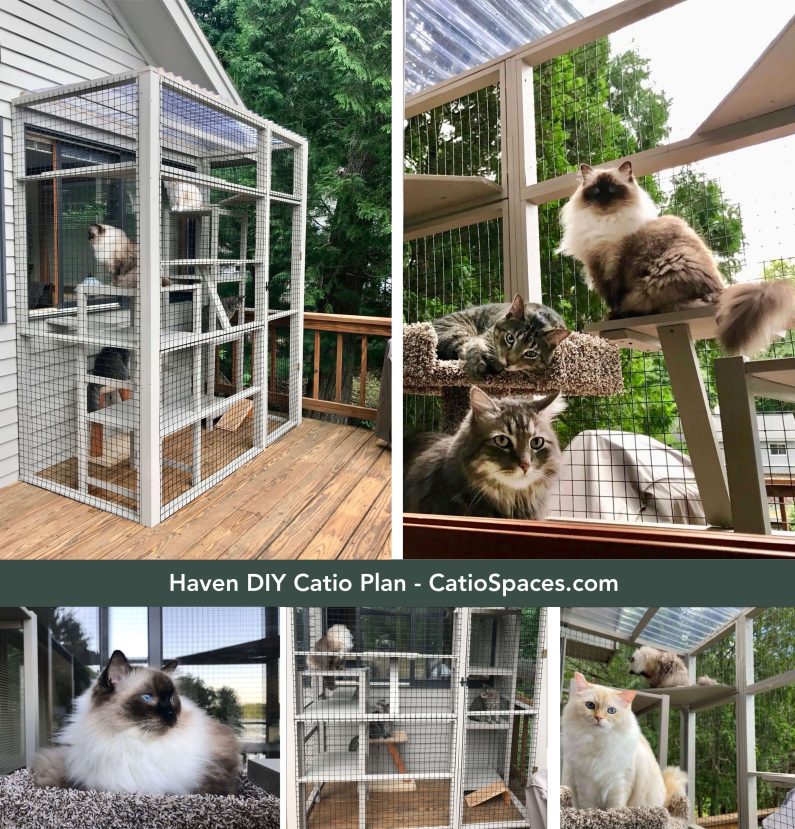
Gradual introduction helps multiple cats learn to share and enjoy the space safely
Special Considerations for Different Cat Personalities
- Timid/Fearful Cats: May take weeks to venture outside; never force, let them observe through window first, use extremely high-value treats
- Bold/Adventurous Cats: These are your escape artists - require longest supervised Oscillot training period, watch constantly for testing behavior
- Senior Cats: May need ramps instead of jumps, heated areas for arthritis comfort, shorter sessions
- Former Outdoor Cats: Most likely to test boundaries - require strictest supervision and may never be fully trusted in Oscillot-only zones
- Kittens: Excellent time to introduce outdoor access, but ensure enrichment is age-appropriate and safely sized
If you observe these behaviors, immediately restrict access and reassess your system:
- Repeated climbing attempts on Oscillot-protected fence despite paddle rotation
- Attempting to dig under wire mesh or fence lines
- Aggressive chewing on wire mesh or structural components
- Signs of stress (hiding, not eating, excessive vocalization) after outdoor time
- Injuries of any kind
Some cats simply cannot be trusted in hybrid systems and need fully enclosed containment only.
Cost Analysis and Budget Planning
Understanding the financial investment helps you plan a system that fits your budget while meeting your cats' needs. Here's a realistic breakdown.
Sample Budget: Medium Hybrid System
Scenario: 150 linear feet perimeter fence, one 8x8 attached enclosed catio, one 6x6 freestanding catio, 20 feet of elevated tunnel connection
| Component | Materials | Estimated Cost | Notes |
|---|---|---|---|
| Oscillot System | Three 40' kits + one 20' kit + one 12' kit (132 ft) + 2 tree guards | $900-1,100 | Covers perimeter with small buffer |
| 8x8 Attached Catio | Lumber, wire mesh, hardware, roofing, door | $800-1,200 | Attached to house, sloped roof |
| 6x6 Freestanding Catio | Posts, lumber, wire mesh, hardware, concrete | $600-900 | Four corner posts set in concrete |
| 20' Elevated Tunnel | Light lumber, wire mesh, support posts | $300-500 | Connects two catio sections |
| Cat Door | Electronic or manual pet door | $50-300 | Higher end for electronic selective entry |
| Enrichment | Shelves, ramps, furniture, plants, toys | $300-600 | Can add incrementally |
| Tools (if needed) | Saw, drill, level, measuring tape, etc. | $100-300 | One-time investment, future use |
| Miscellaneous | Extra hardware, repairs, unexpected needs | $150-250 | Buffer for surprises |
| TOTAL PROJECT COST: | $3,200-5,150 | DIY labor, mid-range materials | |
Money-Saving Strategies
- Phase Construction: Build core components first (Oscillot perimeter + one catio), add sections as budget allows
- Material Shopping: Buy lumber and wire mesh from agricultural supply stores often cheaper than home improvement chains
- Salvage and Repurpose: Free pallets, reclaimed wood, and salvaged materials can reduce costs 30-40%
- DIY Labor: Professional installation triples costs; DIY with helper saves thousands
- Size Smart: Two 6x6 catios cost less than one 12x12 but still provide 72 sq ft of enclosed space
- Modular Approach: Start with ground-level catios, add elevated features and tunnels later
- Bulk Buying: Partner with neighbors doing similar projects to buy wire mesh and lumber in bulk
When to Consider Professional Installation
Some scenarios justify hiring professionals despite higher costs:
- Complex terrain or multi-level yards requiring significant grading
- Structural attachment to house requiring load-bearing analysis
- HOA or permit requirements needing licensed contractor
- Limited time or physical ability to complete large-scale DIY project
- Desire for high-end finishes and custom design work
Professional Installation Costs: Expect to pay $5,000-15,000 for systems similar to the DIY example above. Custom luxury installations can exceed $25,000.
Troubleshooting Common Issues
Even well-planned systems may encounter challenges. Here's how to address the most common problems.
Oscillot-Related Issues
| Problem | Causes | Solutions |
|---|---|---|
| Paddles not spinning freely | Debris, spider webs, misalignment, loose hardware | Clean paddles thoroughly, check post kit alignment, tighten any loose screws, apply silicone spray to paddle axles |
| Cat successfully jumping over | Fence too short, launching platform nearby, very athletic cat | Verify 6'+ fence height, remove all objects within 8' of fence, consider adding fence height extension in problem areas |
| Gaps at corners or gates | Improper corner installation, gate misalignment | Install additional corner paddle sets, adjust gate hardware, add extra post kit at gap location |
| Paddles fading or weathering | UV exposure over time | Normal wear; consider replacing paddle sets every 5-7 years, or purchase additional paddle sets when they go on sale |
Enclosed Catio Issues
| Problem | Causes | Solutions |
|---|---|---|
| Wire mesh sagging | Insufficient support, heavy snow load, poor tension | Add intermediate frame supports, increase roof pitch, install additional horizontal bracing |
| Water pooling/drainage issues | Flat roof, poor ground grading | Create slope minimum 3:12 pitch, install gutters, improve ground drainage with gravel |
| Predator attempting entry | Gaps in mesh, weak floor, accessible roof | Inspect and seal all gaps, install hardware cloth floor barrier, trim overhanging branches |
| Wood rot or deterioration | Moisture contact, insufficient sealing | Replace affected boards, reseal annually, ensure ground contact uses PT lumber, improve drainage |
| Cats not using catio | Insufficient enrichment, uncomfortable conditions, stressful location | Add vertical elements, provide shade and shelter, move food/treats outside, ensure quiet location |
Integration Issues
| Problem | Causes | Solutions |
|---|---|---|
| Cats won't use tunnels | Too narrow, too long, intimidating, claustrophobia | Increase tunnel size to 18"x18" minimum, add windows/openings along length, make shorter sections, place treats at far end |
| Elevated walkway instability | Insufficient support posts, warped boards, loose connections | Add support posts every 4-6 feet maximum, replace warped lumber, reinforce all connections with L-brackets |
| Gate accidentally left open | Human error, unclear signage | Install spring-loaded auto-close hinges, add large visible signs, use different colored gates, train all family members |
| Gaps between tunnel and catio | Settling, improper initial fitting, thermal expansion | Add flexible weather stripping, use wire mesh to close gaps, reinforce connections with additional brackets |
Ready to Create Your Ultimate Hybrid Catio System?
Everything you need to get started is available now. Oscillot's premium paddle systems and careful planning will give your cats the outdoor freedom they crave with the security you need.
Questions about which products are right for your hybrid system? Contact Oscillot's expert team for personalized recommendations based on your specific yard and needs.
Conclusion: The Future of Cat Containment
The hybrid approach combining enclosed catios with Oscillot paddle systems represents the evolution of responsible cat ownership. By thoughtfully integrating both containment methods, you create an outdoor environment that:
- Maximizes your cats' outdoor access while maintaining complete safety
- Provides diverse environments that keep cats mentally and physically stimulated
- Offers flexibility to expand and modify as your needs change
- Protects local wildlife by keeping your cats contained
- Gives you peace of mind knowing your cats are secure
- Increases your property's value with well-designed outdoor living spaces
Whether you're starting with a simple 12-foot Oscillot kit and small window catio or planning an elaborate multi-zone system, the key is starting somewhere. Every cat deserves safe outdoor access, and with modern solutions like Oscillot combined with creative catio design, there's never been a better time to make it happen.
Your cats will thank you with countless hours of joyful outdoor exploration, healthy exercise, and the satisfied contentment that comes from experiencing the natural world safely. Start planning your hybrid system today, and transform your backyard into the ultimate feline paradise.
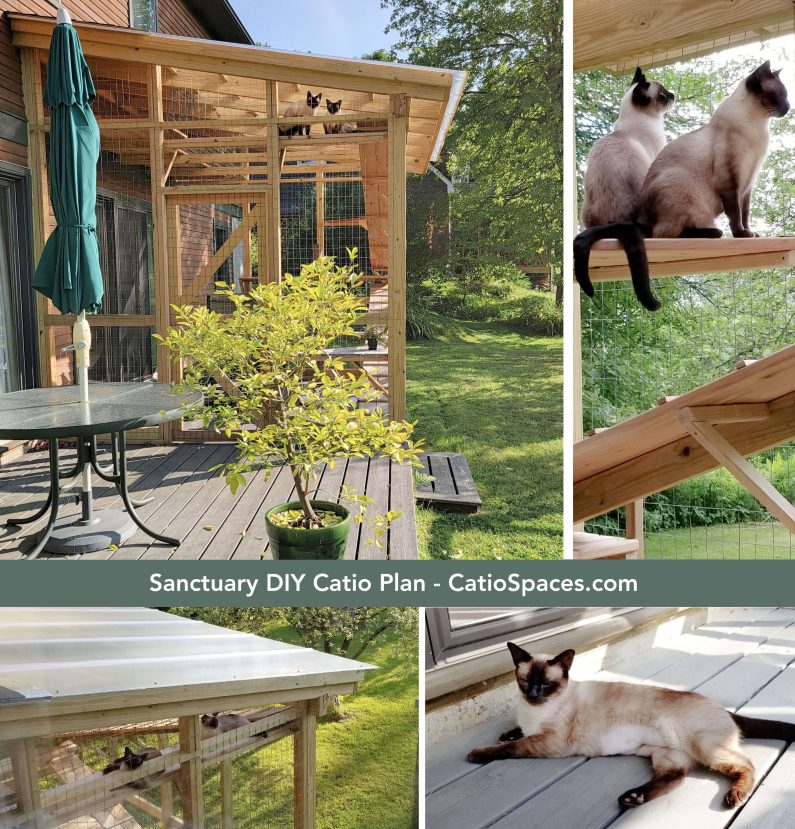
With creativity and planning, your hybrid catio-Oscillot system can become an architectural highlight and your cats' favorite place


